PaxelMarket E-commerce Platform
Technology Stack
PaxelMarket E-commerce Platform
Summary
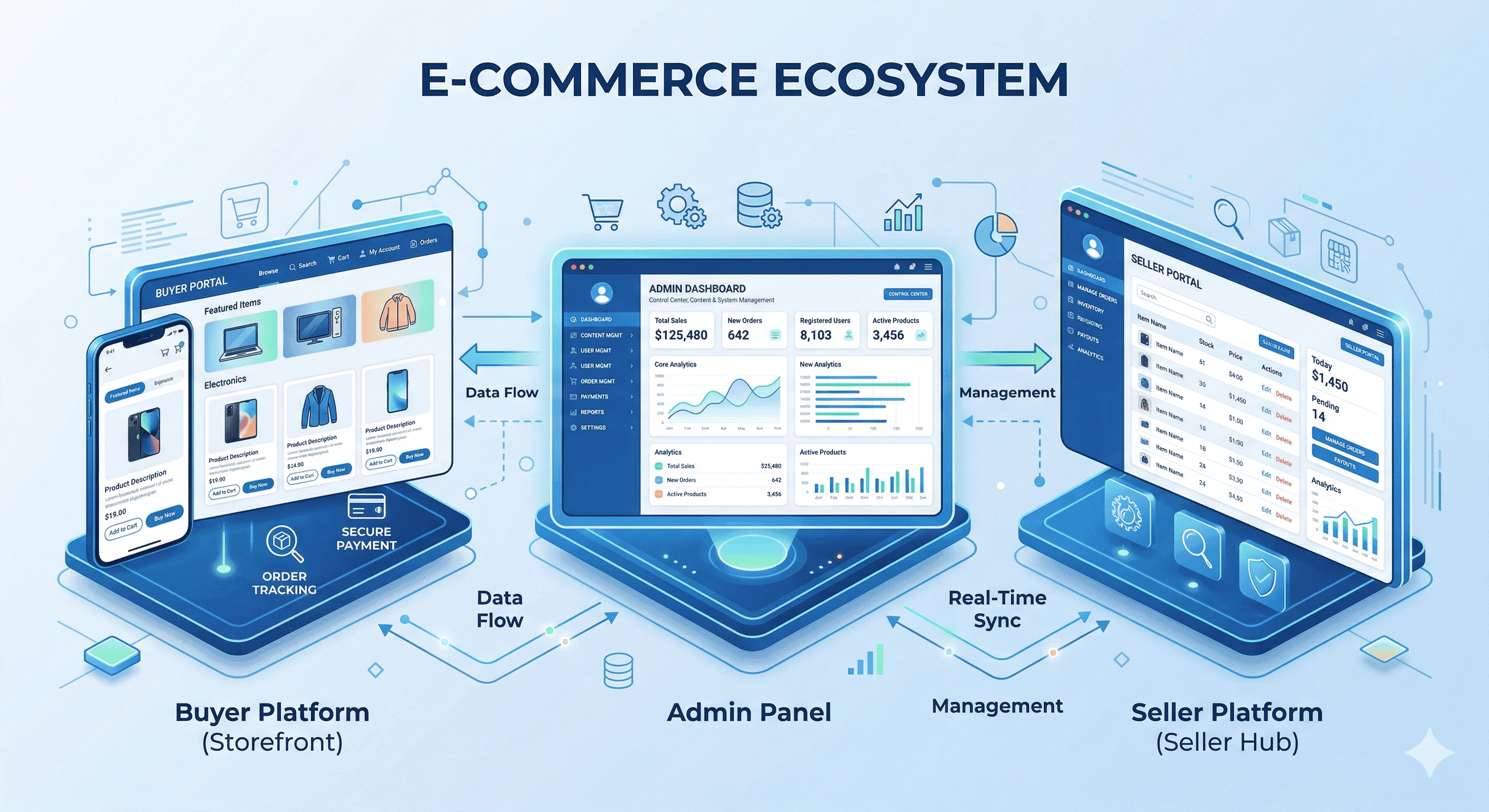
A comprehensive e-commerce platform built from the ground up with fully integrated frontend and backend systems. The platform features separate dedicated applications for Buyers (Users), Sellers, Administrators, and a centralized API layer - all working seamlessly together.
Platform Scale
Context & Requirements
PaxelMarket needed a modern, scalable e-commerce ecosystem that could handle:
- Multiple User Types: Buyers, Sellers, and Admins with distinct experiences
- Real-time Operations: Inventory sync, order tracking, notifications
- High Traffic: Handle flash sales and promotional events
- Integration: Connect with existing logistics and payment systems
Business Goals:
- Create a marketplace connecting local sellers with nationwide buyers
- Enable seamless order management and fulfillment tracking
- Provide powerful analytics for sellers and administrators
- Support promotional campaigns and flash sales
Architecture
PaxelMarket Microservices Architecture
Tech Stack:
| Layer | Technology | Purpose |
|---|---|---|
| Buyer Frontend | Nuxt.js, Vue.js | SSR for SEO, fast initial load |
| Seller Dashboard | Vue.js, Vuetify | Rich data tables, analytics |
| Admin CMS | Vue.js, Element UI | Content & order management |
| API Layer | Node.js, Express | RESTful endpoints, authentication |
| Database | MongoDB | Flexible document storage |
| Caching | Redis | Session, cart, real-time data |
| Search | Elasticsearch | Product search & filtering |
Key Decisions & Tradeoffs
Separate Applications Strategy
Instead of a monolithic frontend, we built 4 separate applications:
| Application | Users | Focus |
|---|---|---|
| Buyer App | Customers | Fast, SEO-optimized shopping experience |
| Seller Portal | Merchants | Product management, analytics, orders |
| Admin CMS | Internal team | Full control, moderation, support |
| Shared API | All apps | Centralized business logic |
Why this approach?
- Independent deployment cycles
- Optimized bundle sizes per user type
- Team autonomy and parallel development
- Better security through isolation
Real-time Inventory Management
Implemented real-time inventory synchronization ensuring buyers always see accurate stock levels, eliminating overselling issues.
Implementation Highlights
1. Buyer Application (Nuxt.js)
- Server-Side Rendering: SEO-optimized product pages
- Smart Caching: Category pages cached, personalized content dynamic
- Progressive Web App: Offline browsing, push notifications
- Lazy Loading: Images and components loaded on-demand
2. Seller Dashboard
- Real-time Analytics: Live sales data, visitor counts
- Bulk Operations: Mass product updates, inventory management
- Order Management: Integrated with logistics API
- Performance Insights: Conversion funnels, product rankings
3. Admin Control Panel
- Moderation Tools: Product approval, seller verification
- Promotion Engine: Flash sales, coupons, campaigns
- Support Integration: Customer service ticket management
- Reporting: Financial reconciliation, platform health
4. Centralized API
- Authentication: JWT with refresh tokens, OAuth2
- Rate Limiting: Protect against abuse
- Versioning: API v1, v2 running simultaneously
- Documentation: Auto-generated OpenAPI specs
Results & Metrics
Performance Improvements
Key Achievements:
- Reduced page load time by 81% (4.2s → 0.8s)
- Decreased cart abandonment by 65% (23% → 8%)
- Increased mobile conversions by 122%
- Improved system uptime to 99.9%
- Successfully handled 10x traffic during promotional events
Team Leadership
As Tech Lead, my responsibilities included:
- Planning & Estimation: Sprint planning, technical feasibility assessment
- Architecture Decisions: System design, technology selection
- Code Quality: Established PR review process, coding standards
- Mentorship: Guided 4 junior-mid developers
- Stakeholder Communication: Technical liaison with product and business teams
- Troubleshooting: On-call support for critical production issues
What I Would Improve
With hindsight, improvements I would make:
- GraphQL for Buyer App: Reduce over-fetching on product pages
- Event Sourcing: Better audit trail for order state changes
- Feature Flags: More granular rollout control
- E2E Testing: Comprehensive Cypress test coverage
- Observability: Better distributed tracing implementation
Lessons Learned
"Leading a team to build a platform from scratch taught me that clear architecture decisions early on save countless hours of refactoring later."
The separation of applications proved invaluable during high-traffic events - we could scale the buyer app independently without affecting seller operations.
Related Projects
Explore more of my work